
7v7 Uniform Anatomy: Jerseys, Shorts and Custom Details
What goes into a custom 7v7 uniform? Explore the jersey, shorts and design details in this illustrated guide, using all six slides from Stagfield Sports’ Day 1 — Carousel 02.
Understand the complete 7v7 uniform
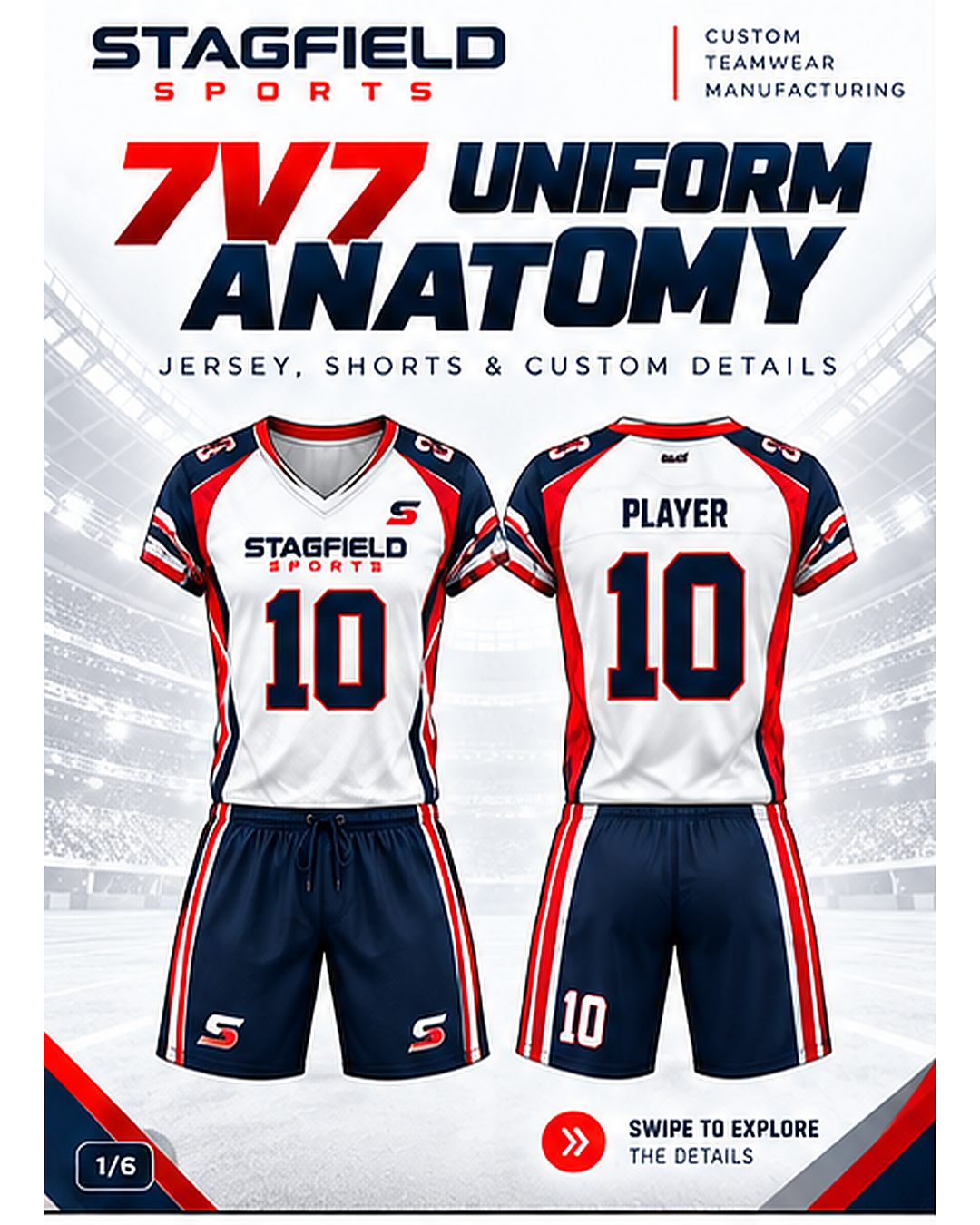
A custom 7v7 uniform is a coordinated set of decisions about the jersey, shorts and team identity. The overall design matters, but so do the neckline, garment shape, waistband and placement of player details. Reviewing these elements together helps a team prepare a clearer brief before requesting a quote.
This guide expands Stagfield Sports’ six-slide uniform anatomy carousel. The illustrations show design ideas and areas to discuss with your supplier. Use them as a starting point for specifying your own kit, then confirm the actual materials, construction and customization choices for your order.
Jersey anatomy: neckline, fabric, fit and stitching
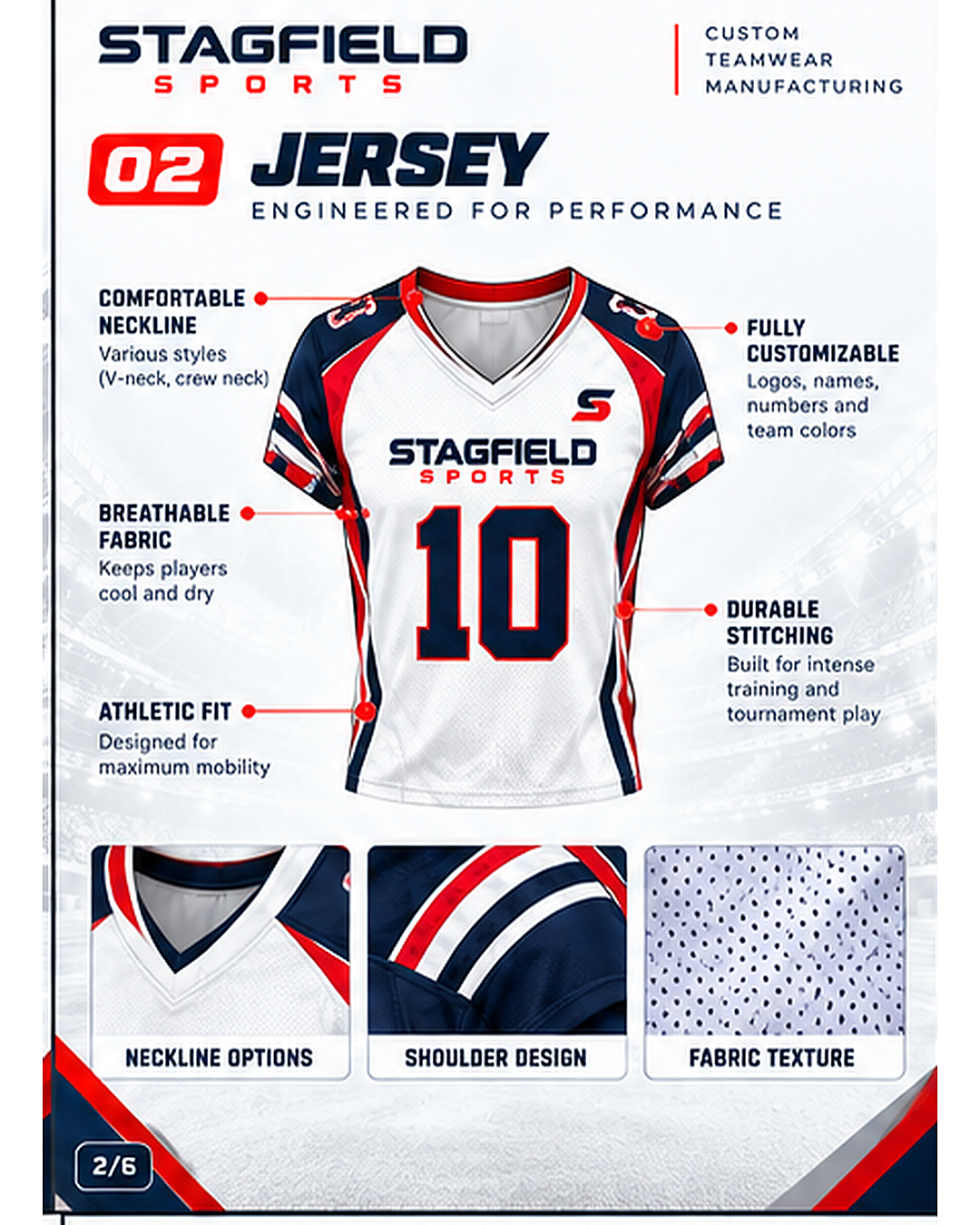
Start at the neckline. The carousel illustrates a V-neck and mentions crew-neck options. Decide which style suits the team, then review the opening and finish on a sample. A neckline that looks right in artwork still needs to feel comfortable when worn.
Next, discuss the fabric and intended fit. The carousel highlights breathability and an athletic shape as design priorities. Ask what fabric is proposed, how much stretch it offers and which measurements define the jersey. Terms such as “performance” or “athletic fit” should lead to a specification you can review, rather than stand in for one.
Look closely at the shoulder design, sleeve shape, side panels and stitching. Ask how these details will be constructed and inspect the finished sample for the agreed fit and finish. Check the front, back and shoulder artwork together so that logos, names and numbers have a clear place in the design.
Shorts anatomy: waistband, movement and side panels
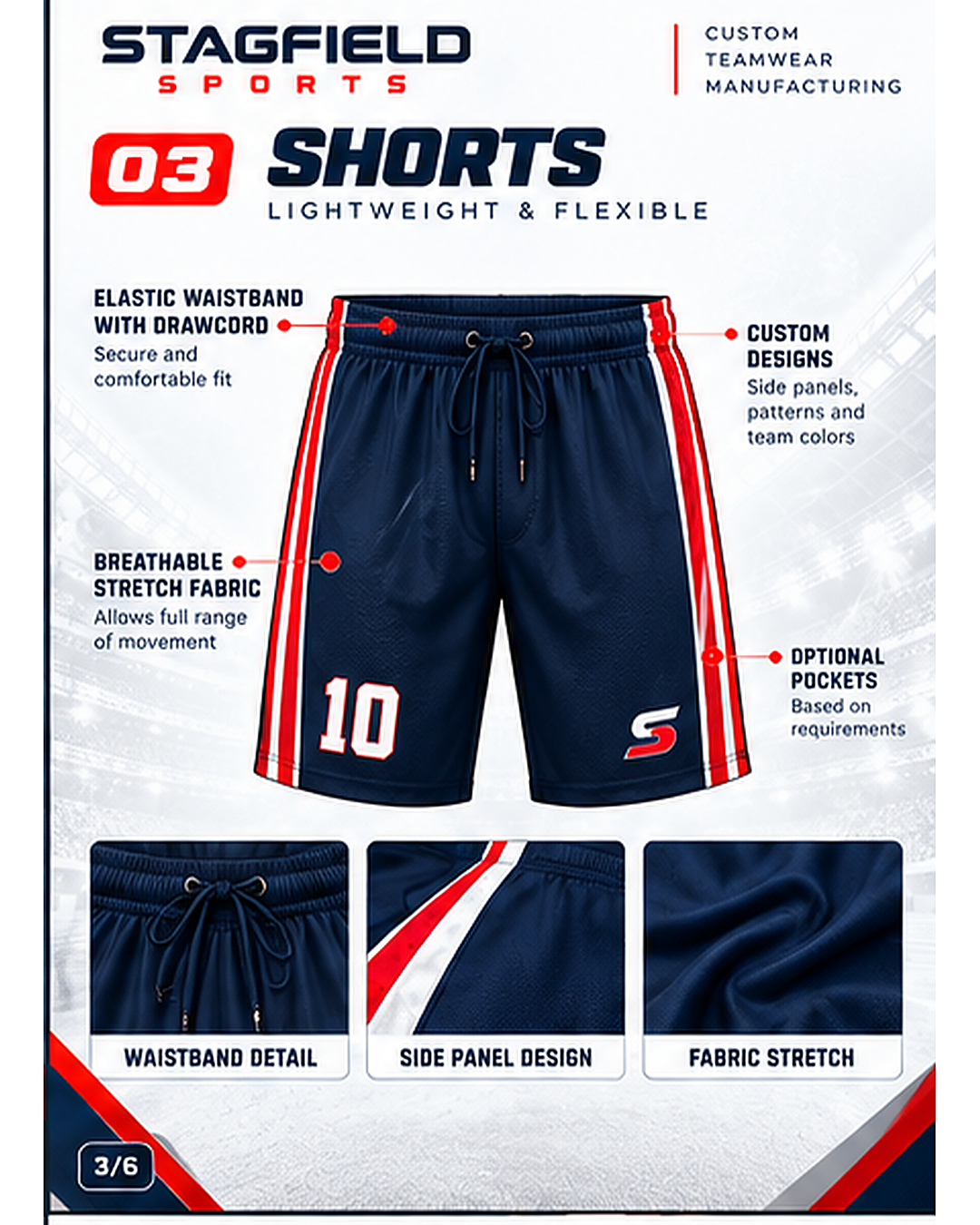
The shorts deserve the same attention as the jersey. The illustrated design uses an elastic waistband and drawcord. Confirm the waistband construction, drawcord arrangement and waist measurements for your own order, then assess the fit on a sample where practical.
Discuss the fabric, inseam and garment shape with movement in mind. Ask the supplier to identify the proposed stretch fabric and confirm how the shorts should fit. A drawing can communicate the desired appearance, but it cannot establish how a finished garment feels when worn.
Side panels, patterns, team colors and player numbers connect the shorts to the jersey. Review their placement as part of the complete set. The carousel also shows optional pockets: specify whether you want them and check the requirements of your competition before finalizing that choice.
Customization: make every name, number and logo clear
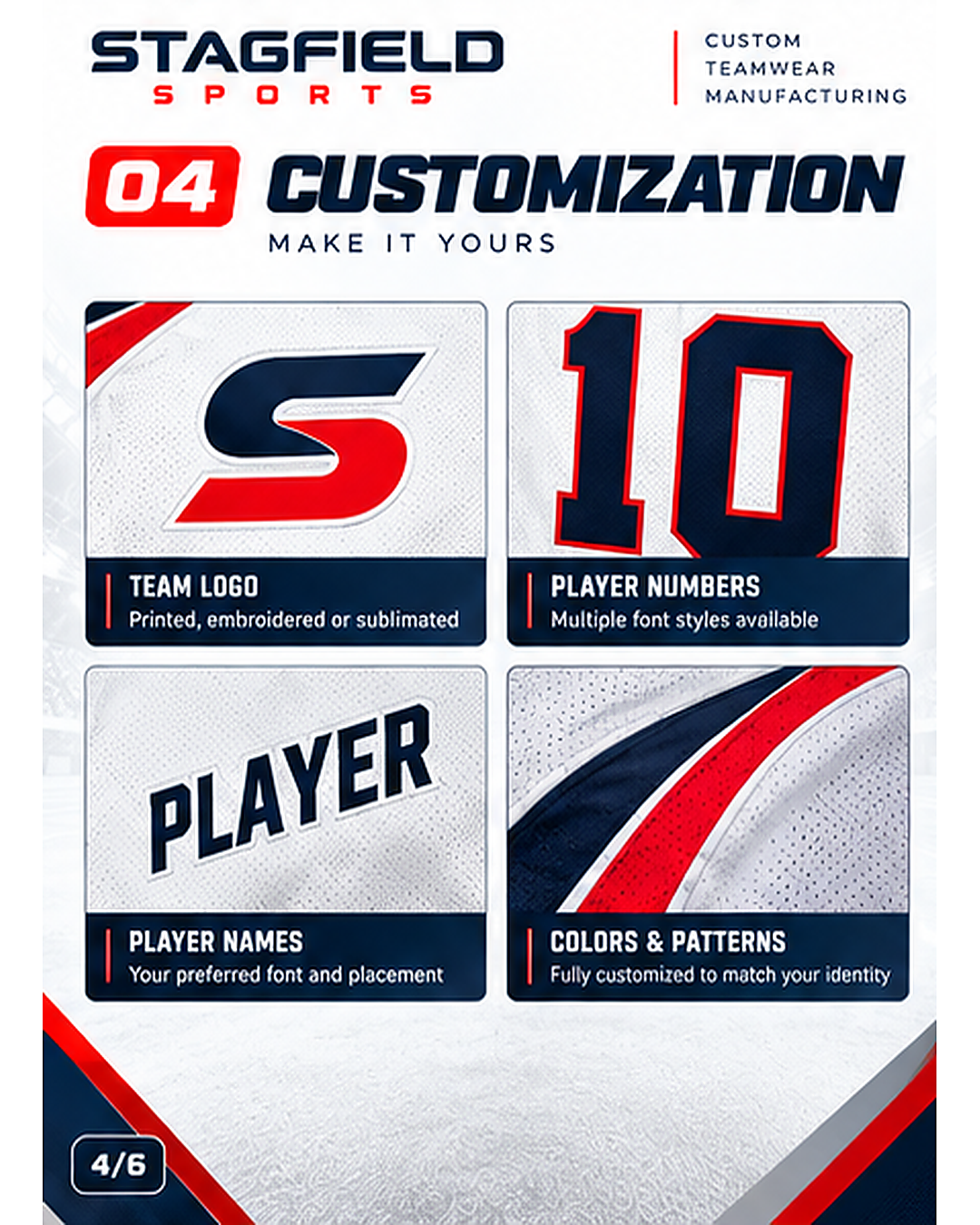
Customization gives a uniform its team identity. Prepare your logo files, player names, numbers, preferred fonts and color references before signing off the design. Include instructions for both the jersey and shorts, with front and back views where needed.
The carousel lists printing, embroidery and sublimation as possible logo treatments. Discuss which method is appropriate for the agreed fabric, placement and design, and confirm what is available for the actual order. Do not assume that every illustrated option is included in the same specification or quote.
Check names and numbers against one final roster. Match each entry to a size, and review spelling, number style and placement on the proof. If a design changes, make sure the revised version replaces the earlier one in writing. Clear artwork approval gives both the buyer and supplier a shared reference.
Compare design options as complete uniform sets
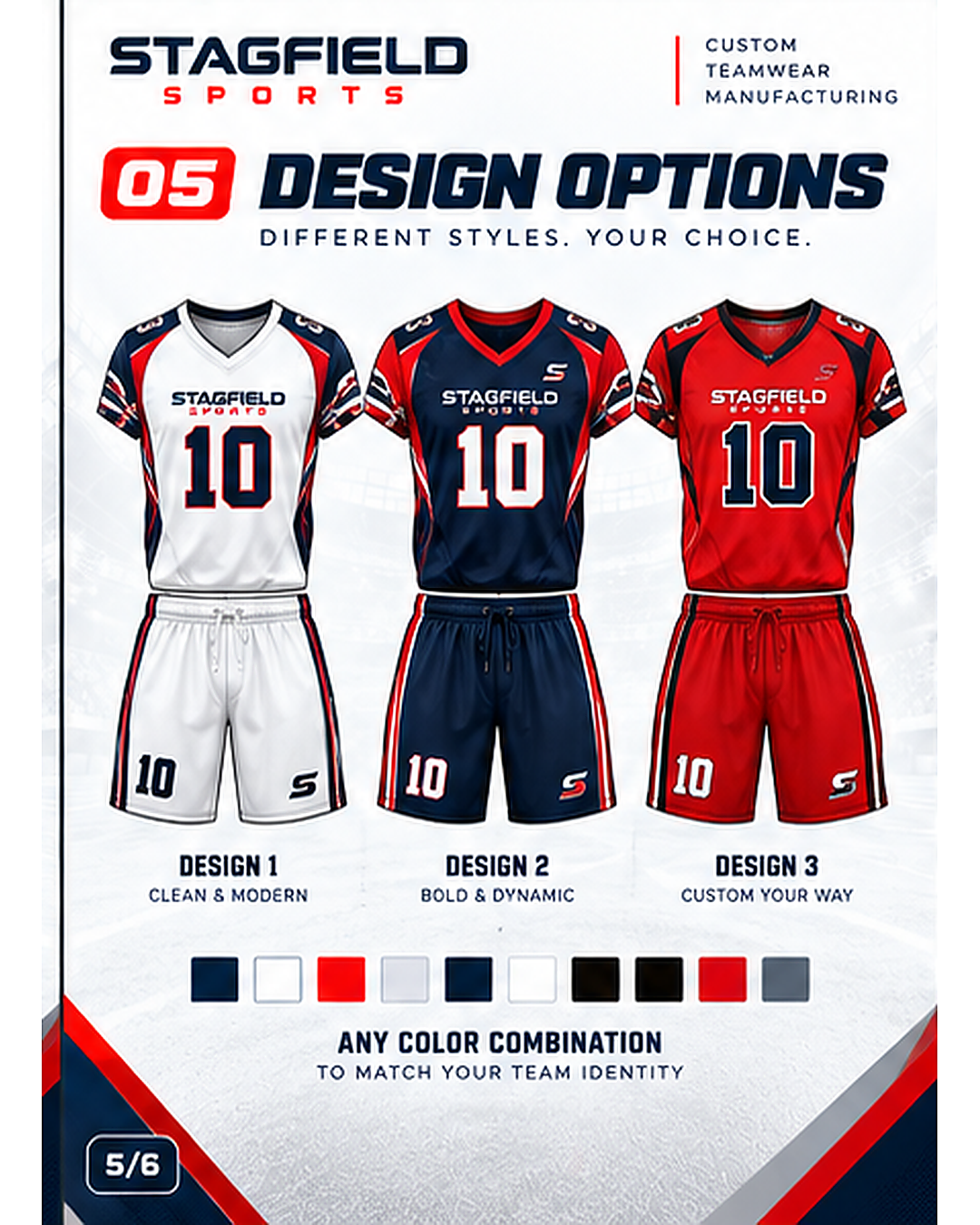
The carousel presents three visual directions: a predominantly white set, a navy set and a red set. Each uses contrasting panels and coordinated shorts to create a different expression of the same team identity. These examples can help you explain whether you prefer a lighter, darker or more prominent team-color design.
Compare the whole set rather than choosing the jersey in isolation. Look at how the panel shapes, number outlines and logo placement work across both garments. Review the back as carefully as the front, especially where player names and larger numbers appear.
Use the color combinations as design references, then agree the exact colors and available production options with the supplier. Request a proof for the chosen combination and resolve any uncertainty before approval. The final order should identify one confirmed design rather than leave the supplier to choose between several reference images.
Turn the design into a practical order brief
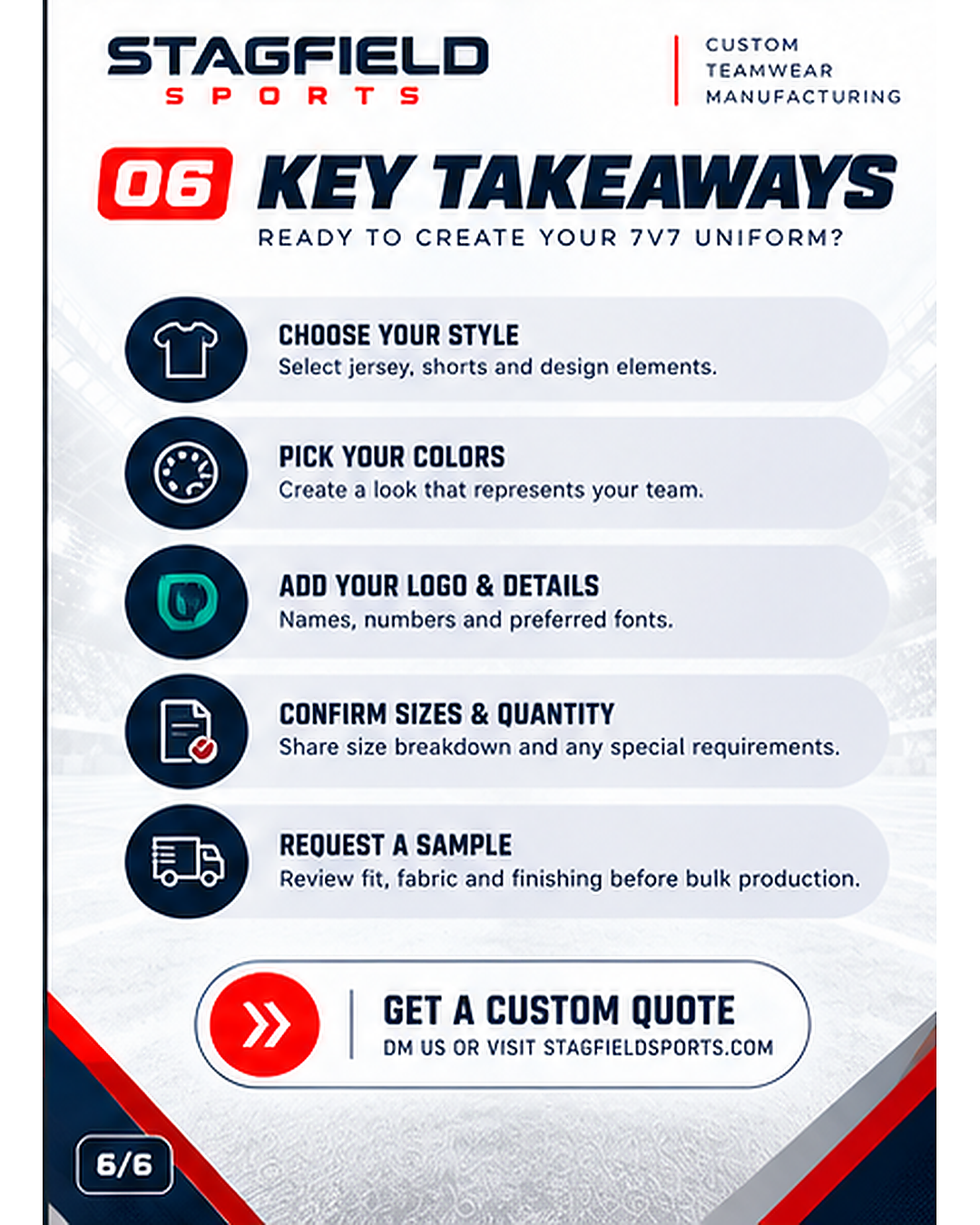
Bring the decisions together in a short, organized brief. Choose the jersey and shorts style, identify the team colors, and supply the logos, names, numbers and fonts. Confirm the size breakdown, quantities and any special construction or packaging requirements you want discussed.
Request a sample where practical and agree what it should demonstrate. Review the fit, fabric and finishing before bulk production, alongside the final artwork and roster. Record corrections clearly so that the approved sample and written specification describe the same uniform.
When you are ready to discuss a custom quote with Stagfield Sports, send your design references and order details through the website’s request-a-quote form. Include the target delivery date and any decisions you still need help clarifying. A complete brief makes the next conversation about your specific requirements, rather than assumptions based on an illustration.